I Watched the Unhinged Anti-Smithsonian Congressional Hearing So You Don’t Have To
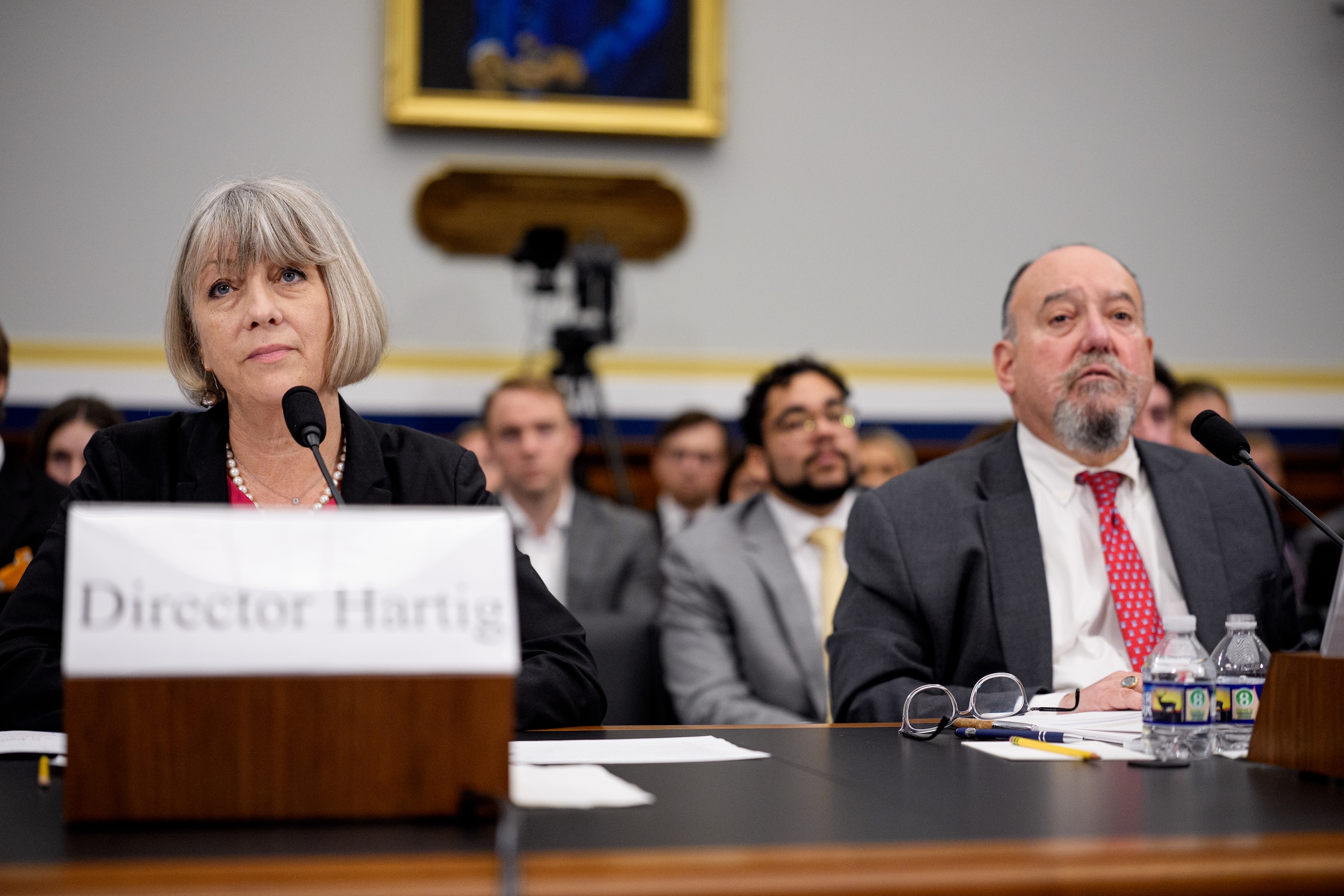
Law & Politics I Watched the Unhinged Anti-Smithsonian Congressional Hearing So You Don’t Have To Anthea Hartig keeps her cool on the stand, answering questions about ideological bias. Anthea Hartig keeps her cool on the stand, answering questions about ideological bias. Ben Davis ShareShare This Article Want to have a bad time? Try watching a congressional hearing. Yesterday’s particularly noxious one, “Rewriting American History: Examining the Smithsonian’s Efforts to Reshape the Past” emerged in response to “Saving America’s Story,” the report released by Trump’s White House Policy Council on July 4. It features 160 pages of grievances about the “ideological capture” of the Smithsonian Institution, claiming that it promotes a left-wing activist agenda. The hearing summoned Anthea Hartig, director of the National Museum of American History, to Capitol Hill to be grilled about the findings by the House Committee on Oversight and Government Reform. Here’s the top-line takeaway: Hartig was serene, professional, and came off as only a little evasive even when faced with severe attack. She firmly denied Republican committee members any real gotcha moments. In general, the Republicans seemed uninformed, taking their talking points directly from “Saving America’s Story” but barely showing knowledge of anything beyond it. The Democrats waffled between righteous urgency and a style of upbeat, professorial debate that failed to meet the moment. They also had their share of gaffes. Testifying alongside Hartig were two Smithsonian critics: Mike Gonzalez, a fellow at the conservative Heritage Foundation think tank and longtime Smithsonian foe, and Matthew Spalding, from the Christian liberal arts college Hillsdale College in Michigan. Opposite them, Pulitzer Prize–winning historian and Yale history professor David Blight served as a “minority witness,” speaking for the Smithsonian. As he is paid to do, Gonzalez played attack dog, calling for the entire Smithsonian leadership to be fired and counseling the deauthorization of the proposed Smithsonian Latino and Women’s museums. Spalding was an irrelevancy, saying nothing memorable and fading into the background after tepid opening remarks. (Someone right now is asking, “Why did we invite this guy?”) Blight, however, emerged as a main character, defending the work of historians and curators, and placing the present debates into context. Democratic representatives came back to him over and over to get an authoritative soundbite. That’s most of what you need to know about this fetid affair. Since I did listen to all 2 hours and 21 minutes, here’s my guide to key moments—noble and ignoble. – About 12:50: Chairman Tim Burchett, Republican of Tennessee, opens the hearing by showing a supercut of Anthea Hartig opening various meetings and Zooms with words of respect for Native Americans. This is meant to show her radical activist agenda, I guess, but right off the bat, it makes you think, “This is the best they got?” – About 19:55: Melanie Stansbury, Democrat from New Mexico, who serves as ranking member on the committee, gives her opening remarks, comparing the present attempt to control museum displays to the rewriting of history during Reconstruction and to McCarthyism. Stansbury takes the moment to introduce the “Smithsonian Integrity and Historical Independence Act,” which, she say, “bars any federal official, including those in the White House, from trying to interfere in the independent institutions of this country and the historic interpretation of our nation’s history, and … reasserts our congressional authority over this independent agency.” – About 25:30: Anthea Hartig gives her opening statement. It is steady and positive. She leans into her own patriotism, as she will throughout. She doesn’t defend against specific attacks, but emphasizes trying to tell a broad story. She does slip in the line, “As we continue to fact-check the report, we unwaveringly attest that it does not accurately or fairly characterize the full range of work at the museum.” I know that Smithsonian defenders are trying not to get bogged down jousting over details cherry-picked to embarrass, but I did wish throughout there was more clarity on what exactly was supposedly mischaracterized in the report. – About 29:05: Gonzalez gives his opening remarks, slyly quoting a New York Times op-ed by lefty What’s the Matter With Kansas? author Thomas Frank, from just after Trump’s 2024 election, “The Elites Had It Coming.” There, Frank quoted a wall label about “settler colonialism” from the Smithsonian, saying that it showed a mentality where institutions’ function was to teach “a lesson about American wickedness.” Whereas Frank was trying to say that U.S. liberal cultural life had taken on a particular moralistic and self-flagellating tone because it was not really in touch with popular movements to win better economic conditions, Gonzalez wants to say that, in fact, the museums really are a radical insurgent movement. Frank’s entire thing is that the culture war deflects from the class war; Gonzalez is saying that the culture war is the real battle. – About 31:10: We are still in Gonzalez’s opener. “It is not just postmodernism that guides their leadership,” he goes on, speaking of the Smithsonian. “They see the world in terms of power dynamics, who has dominance, how to dismantle the American narrative… This is deeply Marxist and Gramscian. In fact their Action Toolkit even quotes approvingly from the works of Frankfurt School critical theorist Herbert Marcuse.” Invoking postmodernism, Antonio Gramsci, and Marcuse seems a pretty obscure way to tee things up in a hearing basically meant as political theater for the cameras. I’ll recommend historian A.J.A. Woods’s recent book The Cultural Marxist Conspiracy if you want to understand the conservative obsession with Frankfurt School philosophers as all-powerful puppet masters behind all that has gone wrong with America. You may be asking what the “Action Toolkit” Gonzalez mentions is. That would be the MASS (Museums as a Site for Social) Action Toolkit, a grassroots initiative by a large network of museum professionals hoping to change the field back in 2014, in the wake of the Black Lives Matter movement. Of its over 50 co-authors from around the country, six had worked for the Smithsonian’s various museums in some capacity. Though the Republicans in the hearing continuously say or imply that the MASS Action Toolkit was a Smithsonian document, it was not. As far as I can tell, even the “Saving America’s Story” report merely claims that in 2019 “NMAH started holding a recurring meeting for NMAH staff members” to discuss it. It expends no effort explaining what this use looked like—but pages upon pages dissecting the document’s jargon and speculating that its malign influence might have led Hartig to use the word “inclusive.” What is true is that the document did represent the kind of framework for anti-racist work in vogue in liberal spaces between 2014 and 2024. The more overbearing claims associated with this moment—such as that “objectivity” was a myth of “white culture,” which the Smithsonian’s Museum of African American History and Culture actually did circulate in 2020—provided a lot of ammo for right-wing culture warriors, and seeded the ground for the current fight. (More on this below.) – About 45:30: Opening statements are over. Now, the hearing returns to Burchett, the chairman, to begin the question period with his own five minutes of questions. Perplexingly, he decides to use time to again harp on the supercut of Hartig’s land acknowledgements. “I do appreciate your constant land acknowledgements from the film,” he drawls. “I’m wondering: Are you planning on deeding any of your personal property, or any of the Smithsonian’s properties, to any of these tribes?” – About 48:20: Burchett now throws up photos of the Dixie Chicks photographed naked on the cover of Entertainment Weekly and Ru Paul’s Drag Race, evidently exhibits culled from a show at the museum called “Entertainment Nation.” He demands to know if Hartig thinks children should see them. “You have pictures of bondage; overtly sexual things; you have transgendered folks—I assume that’s what they are…” “It’s Ru Paul,” Representative Stansbury informs him from the sidelines. “I don’t care who it is!” Burchett claps back. “Not a fan, I can tell you that!” (When Stansbury later gets her turn to speak, she will begin by inviting the committee to watch Drag Race with her over cocktails.) – About 59:37: Texas Republican Mike Cloud says he recently went to the museum bookshop and found a children’s book by actor and activist George Takei, but not Thomas Paine‘s Common Sense (1776). He demands to know who made that stocking decision. – About 1:01:00: Virginia Democrat Suhas Subramanyam, a former Obama technology policy advisor, isn’t exactly electric, but manages solid points about how the attacks on the Smithsonian are deflecting from bread-and-butter economic issues and the Iran war. But he blows it all in an exchange with Gonzalez, trying to argue the “Saving America’s Story” report itself was a waste of taxpayer money. Specifically, he tells the committee he “asked A.I.” how much the report cost and learned it was “probably a million.” “I would advise against using A.I.,” Gonzalez replies. “It hallucinates a lot.” That’s all people will remember from Subramanyam’s slot. – About 1:08:00: A growling Nancy Mace, Republican of South Carolina, gets her turn. “You strive to represent queer pedophiles, indoctrination, grooming of kids at American kids—and it sounds like you are proud of it,” she snaps, spending an excruciating five minutes hammering Hartig with questions like “Do you know how many kids get raped by adults every year in this country?” and “When was your gender revealed?” Mace does say out loud at one point that Hartig seems “very well prepared.” I gather she knows that she didn’t get the big moment she wanted. – About 1:17:30: Brandon Gill, Republican of Texas and former investment banker, begins by asking Hartig if she believes in “objectivity.” When she affirms that she does, he goes in for the twist: “Do you promote a white supremacy culture?” Yes, he’s referring, once more, to the MASS Action Toolkit, which included a document called “White Supremacy Culture”—the one that claims that virtues like “objectivity” and “politeness” are characteristics of whiteness that need to be challenged within organizations. (Worth mentioning: The co-author of “White Supremacy Culture,” Tema Okun, has herself spoken out about how that document’s language has been counterproductive within the movements that took it up, saying its framework was impractically vague and open to abuse.) – About 1:22:00: Still Gill. After a fruitless back-and-forth over whether it is fair for a Smithsonian exhibit to mention that the character Mickey Mouse was inspired by minstrelsy, Gill ends with a true issue for the masses: Should a government museum, he asks, be selling pink hats that say “Latina Power?” – About 1:26:45: As a speaker, Kweisi Mfume, Democrat from Maryland, is the highlight of the hearing. He quotes Abraham Lincoln, makes a clear argument that this is a political battle and an attempt to stamp out Black history, and declares, “We will not let you destroy that museum.” – About 1:29:15: Eric Burlison, bespectacled Missouri Republican, veers off into a tangent about the recent World Cup, and how he’d seen on social media foreign visitors saying that the U.S. was not as bad as they had been told. He’s implying that U.S. museums, or just liberals in general, are to blame. – About 1:42:00: Pat Fallon, Republican of Texas, winds up to asking Hartig: “Would you agree with the statement that we are the greatest country the world has ever known?” No intelligent person could answer this without qualification, so Hartig doesn’t, but it’s unclear what Fallon gets out of this. The Republicans seem obsessed with idea that Hartig has said that loving America can be “complicated.” Fallon goes on to grill her on why there were no new shows on George Washington or Thomas Jefferson during the America 250 celebrations. Hartig answers that they have displays dedicated to those Founders, and new exhibitions that included them. This feels like a waste of everyone’s time. – About 1:52:00: “Do you regret any of the exhibits?” Brian Jack, Republican from Georgia, asks. Hartig thinks and replies, “One of our volunteers has pointed out that we’ve been mislabeling a coin in the American Presidency exhibit for years.” – About 1:54:50: Jasmine Crockett, Democrat of Texas, comes in throwing bombs. She blasts the hearing as a “White Pride rally disguised as a Congressional hearing,” stressing “it is a fact that there is a violent exclusionary discriminatory, sexist, and racist part of American history.” She will also point out “almost 60 percent of the Smithsonian’s total workforce is men, and more than 50 percent is white; more than 90 percent of Smithsonian employees making senior-level pay are white, and 60 percent of them are men.” (Her numbers are slightly off the stats I could find, but maybe she has better ones, and the point stands.) “I don’t understand the fetish of these white guys with fragile egos have with being oppressed,” she says. Crockett fumbles in the homestretch, veering for some reason into a tangential point about racism in the World Cup fandom, but not sure whether Spain or Argentina was accused of being racist. (It was Argentina.) – About 2:11:35: The most bone-chilling performance is MAGA hard-liner Lauren Boebert, Republican from Colorado, demanding over and over where the exhibitions honoring the “50 million aborted babies” as part of U.S. history are at the Smithsonian. It’s really something to behold. Though not something I’d want to behold again. There was a second hearing today, this one with the less-important House Administration Committee—because everyone wants a piece of this fire. We’ll see if I can stomach it, or if it turns up anything new.
~10 min read · 2261 words